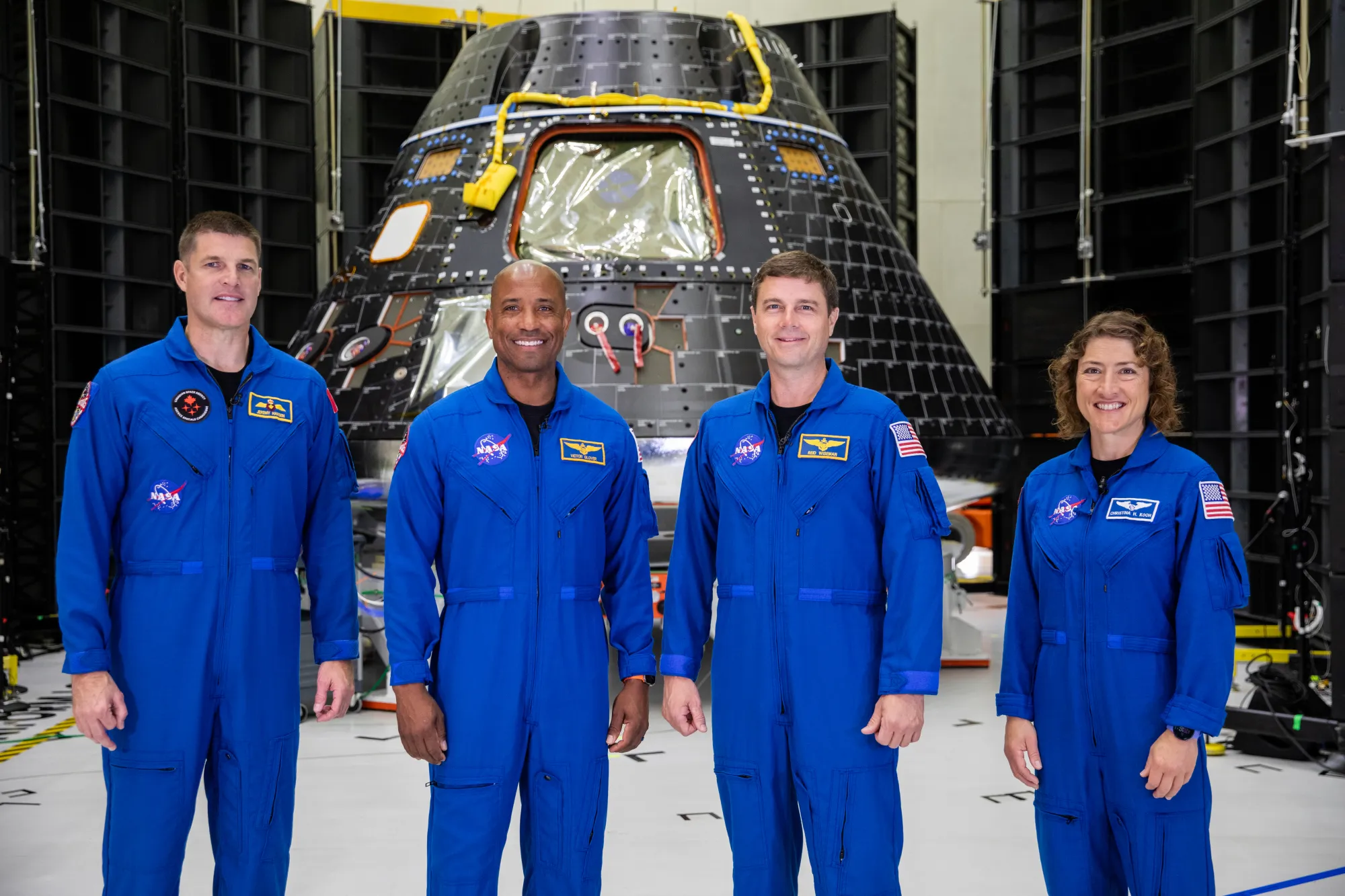
Official Artemis II crew portrait standing in front of SLS or NASA backdrop.
These Four Astronauts Will Lead The Journey.
For decades, the Moon remained silent. No human footprints. No spacecraft carrying astronauts beyond low Earth orbit. Entire generations grew up only hearing stories about Apollo missions in documentaries and history books. But now, that silence is finally about to end.
More than 50 years after humanity last traveled toward the Moon during the Apollo era, four astronauts are preparing to make history once again. Artemis II is preparing to carry humans back into deep space — farther than any astronaut has traveled in more than half a century.
But long before they wore NASA spacesuits… they were simply children staring at the night sky, wondering what existed beyond Earth.
One dreamed of flying fighter jets through the clouds. One pushed beyond every possible limit. One spent years surviving in Earth's harshest environments. And another grew up in Canada imagining a future among the stars.
Now, those dreams are taking them farther from Earth than almost any humans in modern history. These are the four astronauts of Artemis II — humanity's next journey to the Moon.
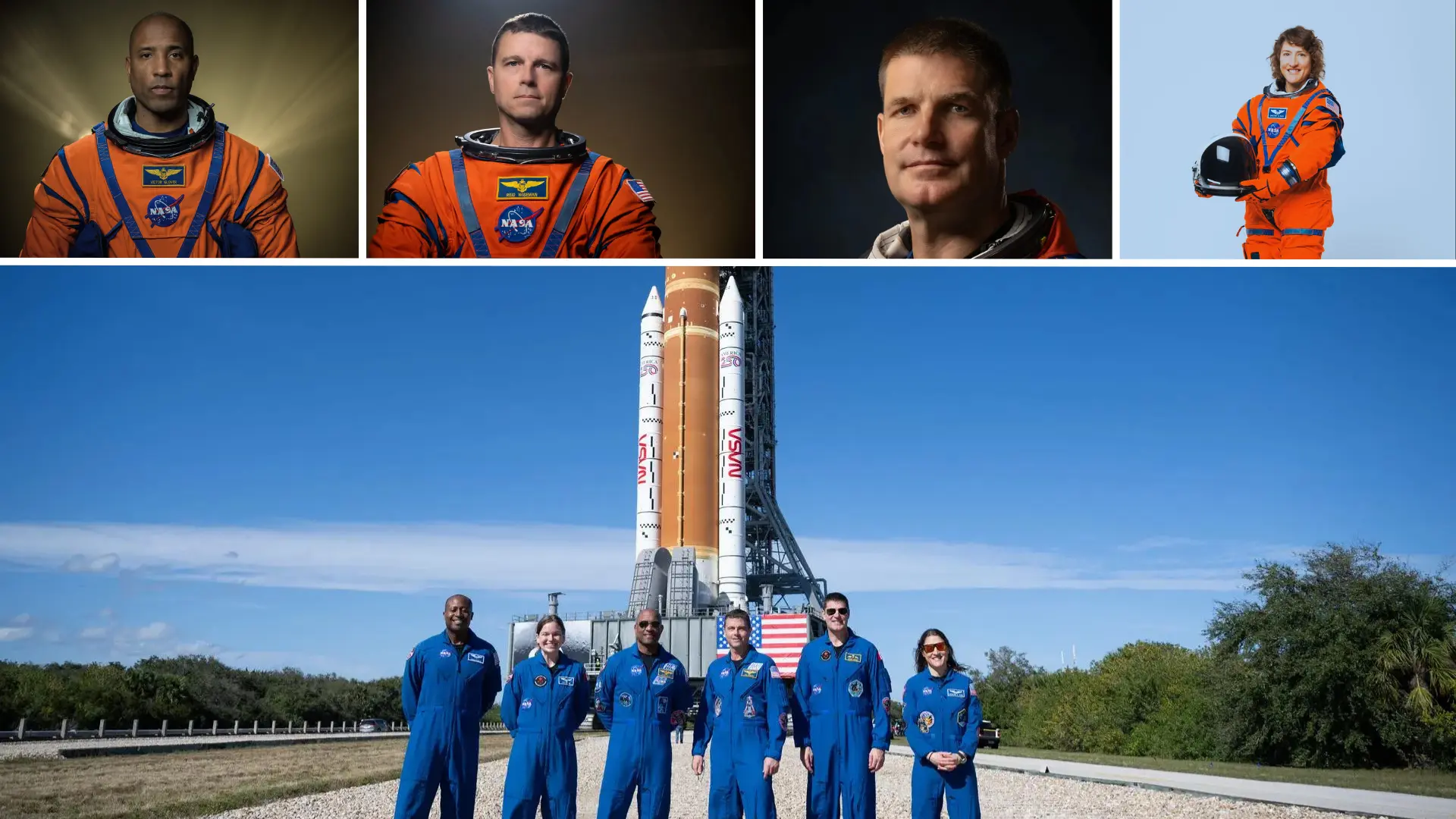
The four astronauts selected for Artemis II — humanity's first crewed journey toward the Moon since Apollo.
The Mission That Begins A New Lunar Era
NASA's Artemis II mission is one of the most important space missions of the modern era. The mission will send humans around the Moon for the first time since Apollo 17 in 1972.
Artemis II is more than a test mission. NASA sees it as the beginning of humanity's permanent return to deep space. The mission is part of the larger Artemis Program, which aims to return humans to the Moon and prepare future missions to Mars.
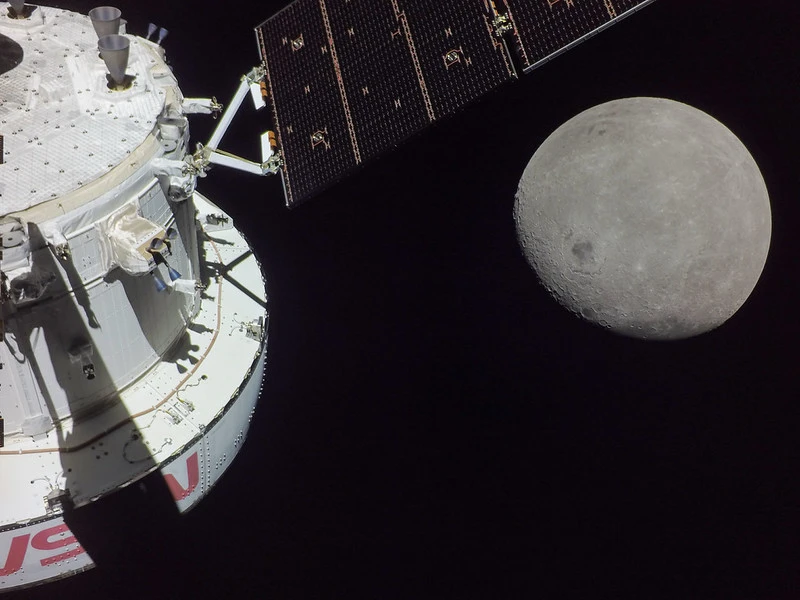
Launching aboard the massive Space Launch System rocket, the astronauts will travel inside the Orion spacecraft on a deep-space lunar flyby mission lasting nearly 10 days.
With nearly 8.8 million pounds of thrust, the rocket will carry the crew hundreds of thousands of kilometers through space — farther than the International Space Station and deep into the Moon's neighborhood.
NASA's Orion spacecraft will carry Artemis II astronauts around the Moon on a historic deep-space mission.
But the mission is not only about technology. It is about people. The four astronauts chosen for Artemis II each carry a different story, different struggles, and different dreams.
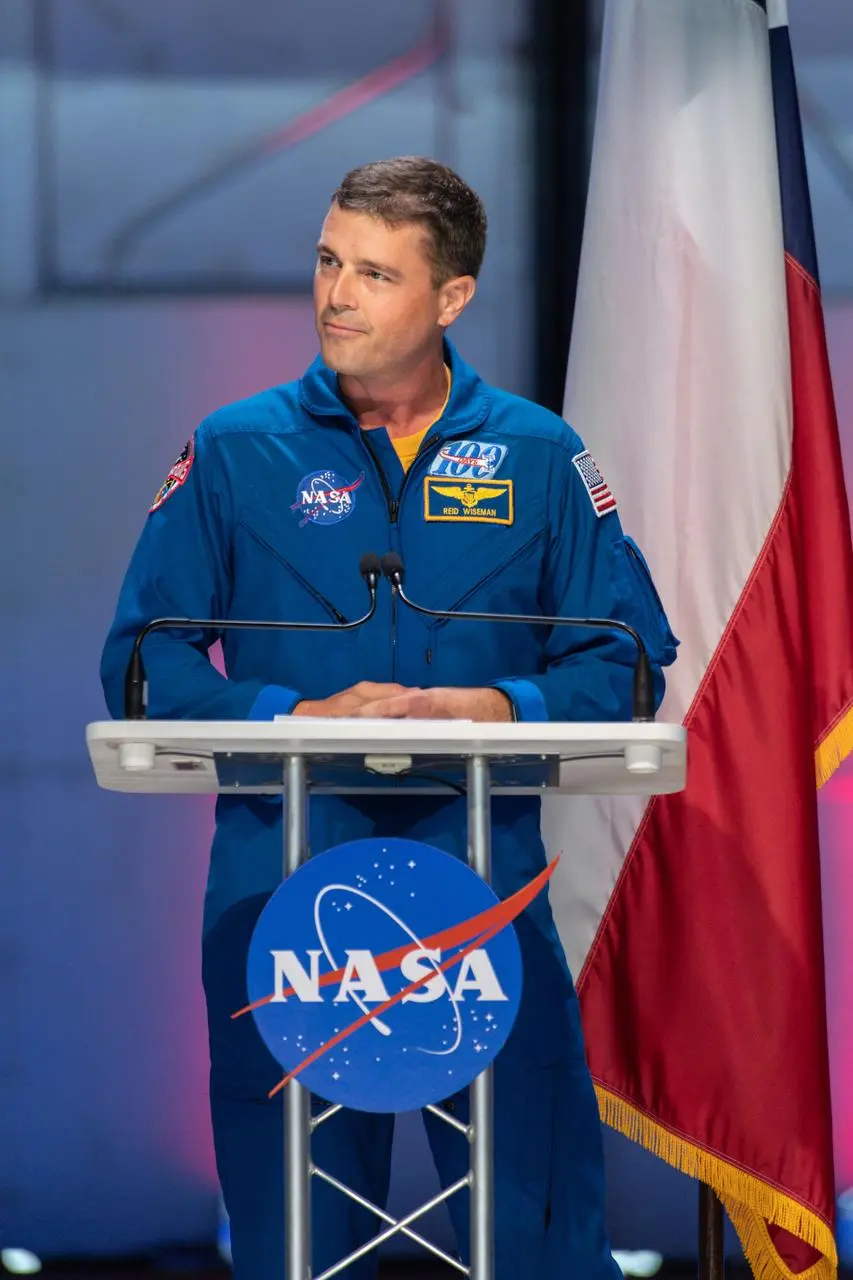
Reid Wiseman — The Commander Leading Humanity Back
As a young boy growing up in Baltimore, Reid Wiseman was fascinated by adventure and the skies above Earth. While many children spent time playing ordinary games, Wiseman pushed himself toward discipline, aviation, and exploration.
That passion eventually transformed him into a U.S. Navy fighter pilot flying legendary aircraft like the F-14 Tomcat and F/A-18 Super Hornet. But flying across Earth's skies was only the beginning.
After being selected by NASA in 2009, Wiseman later spent 165 days aboard the International Space Station, conducting hundreds of scientific experiments and even performing spacewalks in orbit.
The commander of a lunar mission carries enormous responsibility. Every decision in deep space could affect the lives of the entire crew. That is why NASA selected someone with decades of military aviation and leadership experience.
Years of military training, dangerous missions, and leadership experience eventually earned him the role of Artemis II commander. Now, he will help guide humanity back toward the Moon.
Reid Wiseman will command Artemis II during humanity's return toward the Moon.
Victor Glover — The Pilot Who Never Stopped Pushing Limits
Victor Glover's journey to deep space was built on determination. From becoming a naval aviator to flying over 40 different aircraft types, Glover spent years mastering some of the world's most advanced machines.
He completed combat missions, performed carrier landings at sea, and later joined NASA's astronaut program. But space would take him even further.
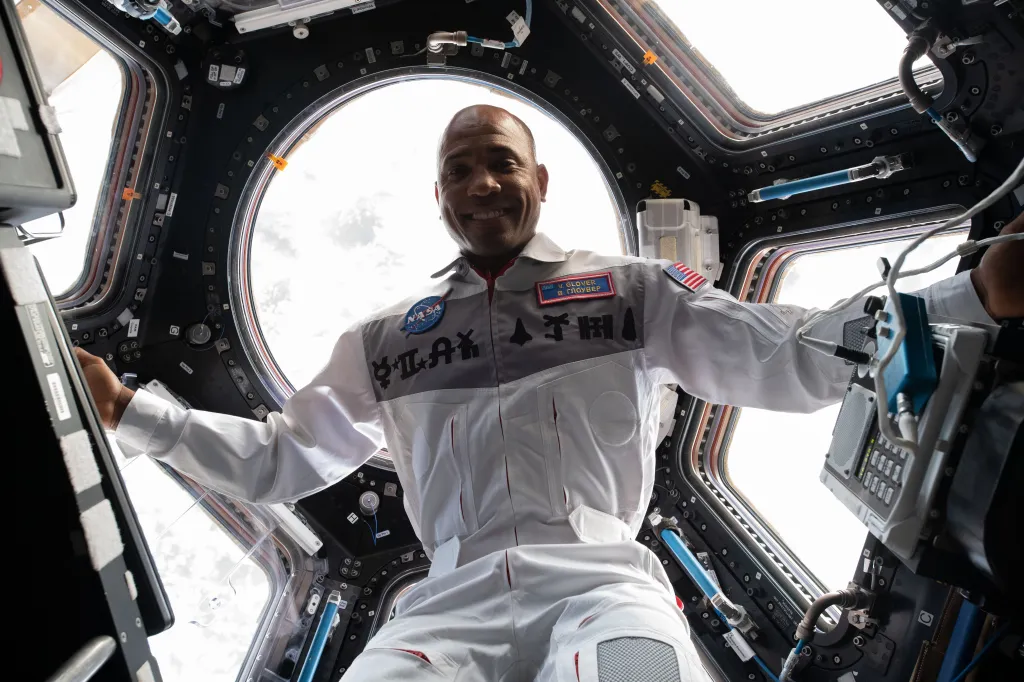
During the SpaceX Crew-1 mission, Glover spent months aboard the International Space Station and completed multiple spacewalks outside Earth. With Artemis II, he is preparing for another historic milestone: becoming the first Black astronaut to participate in a lunar mission.
For millions of young people around the world, Victor Glover's journey represents something deeply powerful: the idea that space exploration should belong to everyone, regardless of background. His story represents a new generation of explorers proving that space belongs to all humanity.
Victor Glover became one of NASA's most inspiring modern astronauts before joining Artemis II.
Christina Koch — The Woman Preparing To Travel Beyond Earth
Before Christina Koch became one of NASA's most famous astronauts, she was simply someone deeply curious about how the universe worked. Science became more than education for her — it became a path toward exploration.
Her career took her through engineering, extreme research environments in Antarctica, and eventually into orbit around Earth. Living in Antarctica for months helped prepare Koch for one of spaceflight's greatest challenges: isolation.
Deep-space missions require astronauts to remain calm, focused, and mentally strong even when separated from Earth by enormous distances. Koch later spent 328 consecutive days in space — one of the longest single spaceflights in history.
She also participated in the world's first all-female spacewalks. Now, Artemis II will place her name into another historic chapter: she will become the first woman ever to travel toward the Moon.
Christina Koch spent nearly a full year in space before being selected for Artemis II.
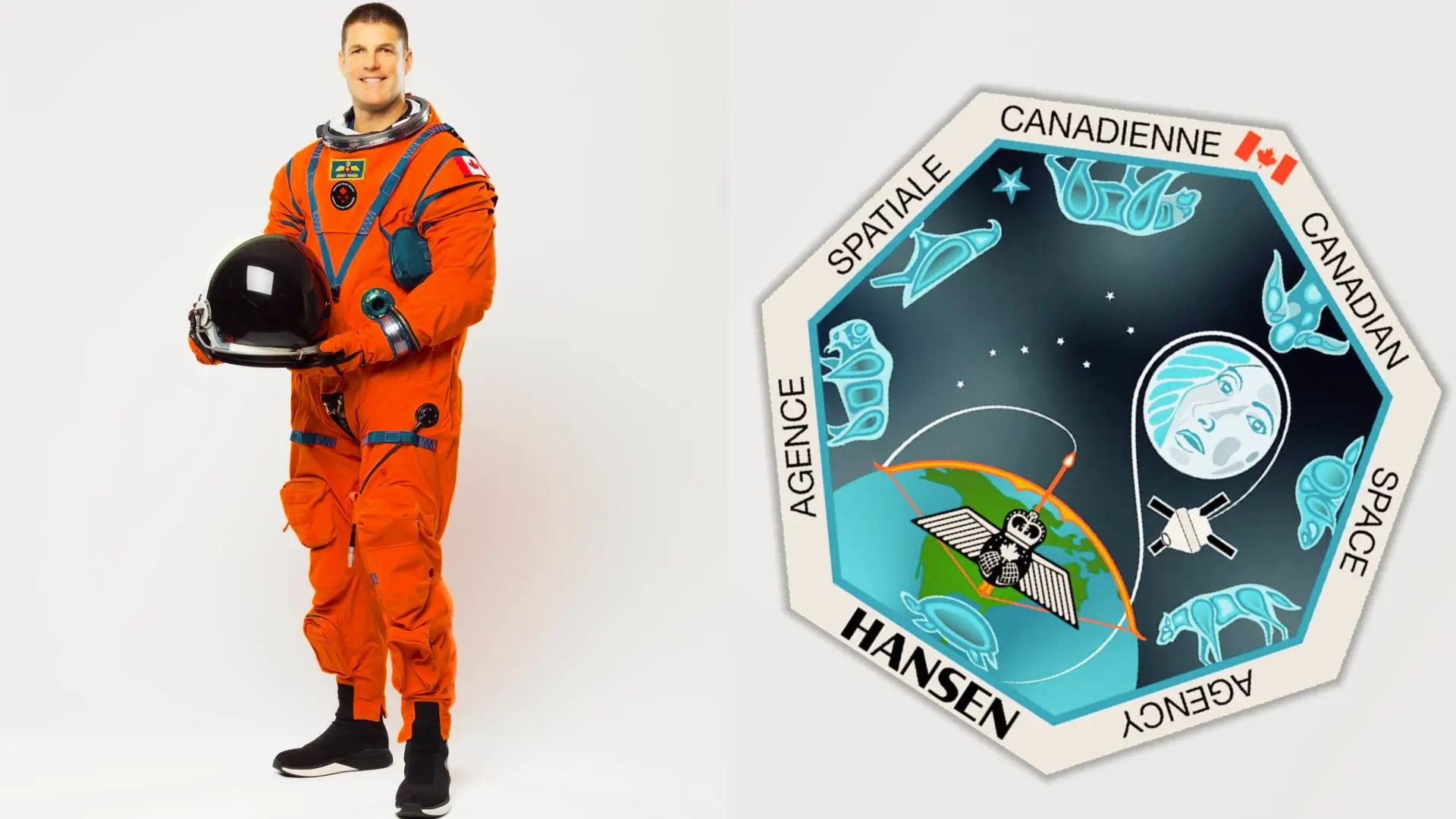
Jeremy Hansen — Canada's First Lunar Explorer
Growing up in Canada, Jeremy Hansen dreamed about aviation and exploration. That dream led him into the Royal Canadian Air Force, where he became a fighter pilot flying CF-18 Hornets.
For years, Hansen worked alongside NASA and the Canadian Space Agency, supporting astronaut operations and mission training. Unlike the other Artemis II crew members, this will be his first journey into space. And it will not be a small one.
Artemis II is not only an American mission. It represents international cooperation between multiple nations working together toward a shared future in space. Jeremy Hansen is preparing to become the first Canadian astronaut ever to travel toward the Moon.
Jeremy Hansen will become the first Canadian astronaut ever to travel toward the Moon.
More Than A Mission
Artemis II is not just another NASA launch. It represents humanity's return to deep space after more than half a century.
Together, these four astronauts symbolize something larger than themselves: the return of human exploration, international collaboration, and a new generation of lunar missions. Artemis II will also help prepare future missions like Artemis III, which aims to return astronauts to the lunar surface. From Artemis I - Artemis II - Artemis III.
Artemis II represents humanity's return to deep space after more than 50 years.
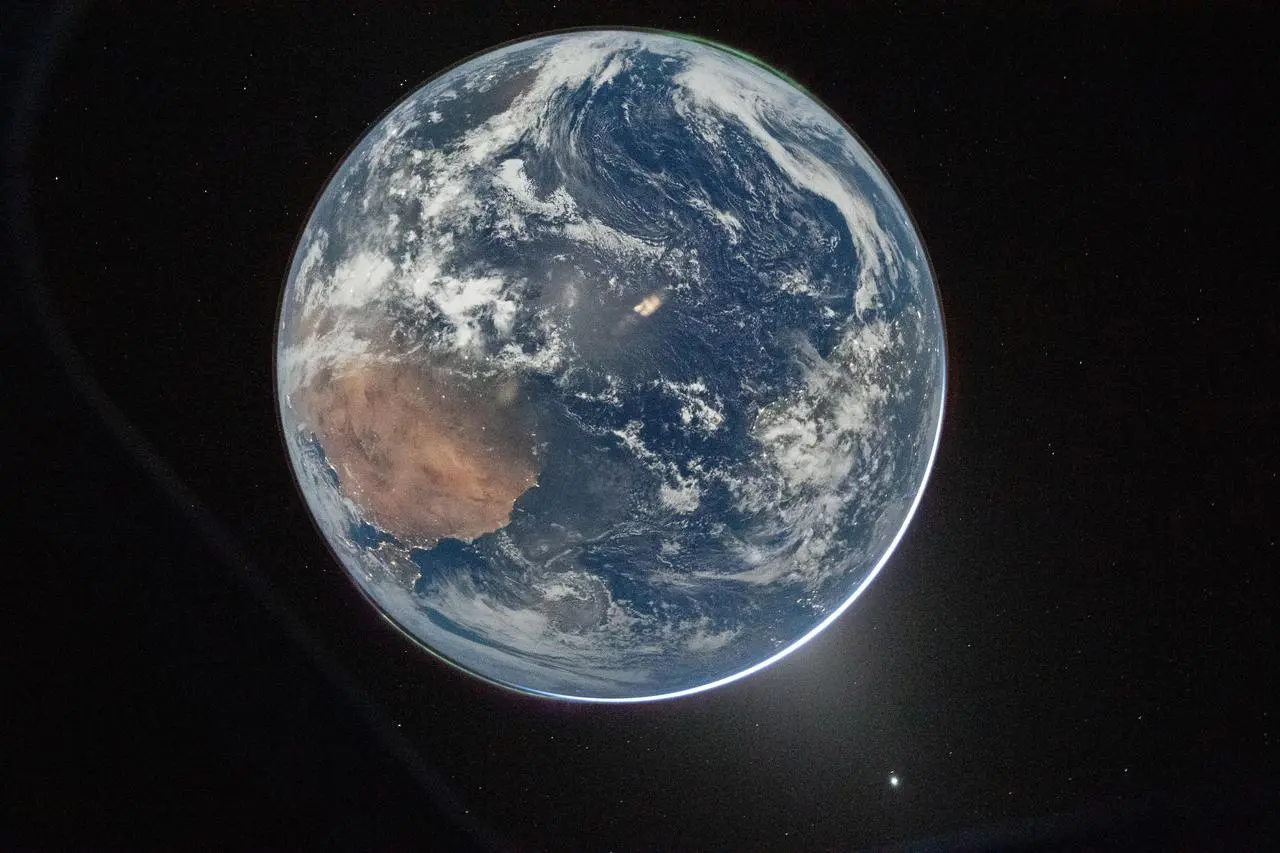
Soon, their spacecraft will leave Earth behind and travel into the darkness of space toward the Moon. And somewhere below them, millions of people on Earth will look up at the night sky — just like these astronauts once did as children.
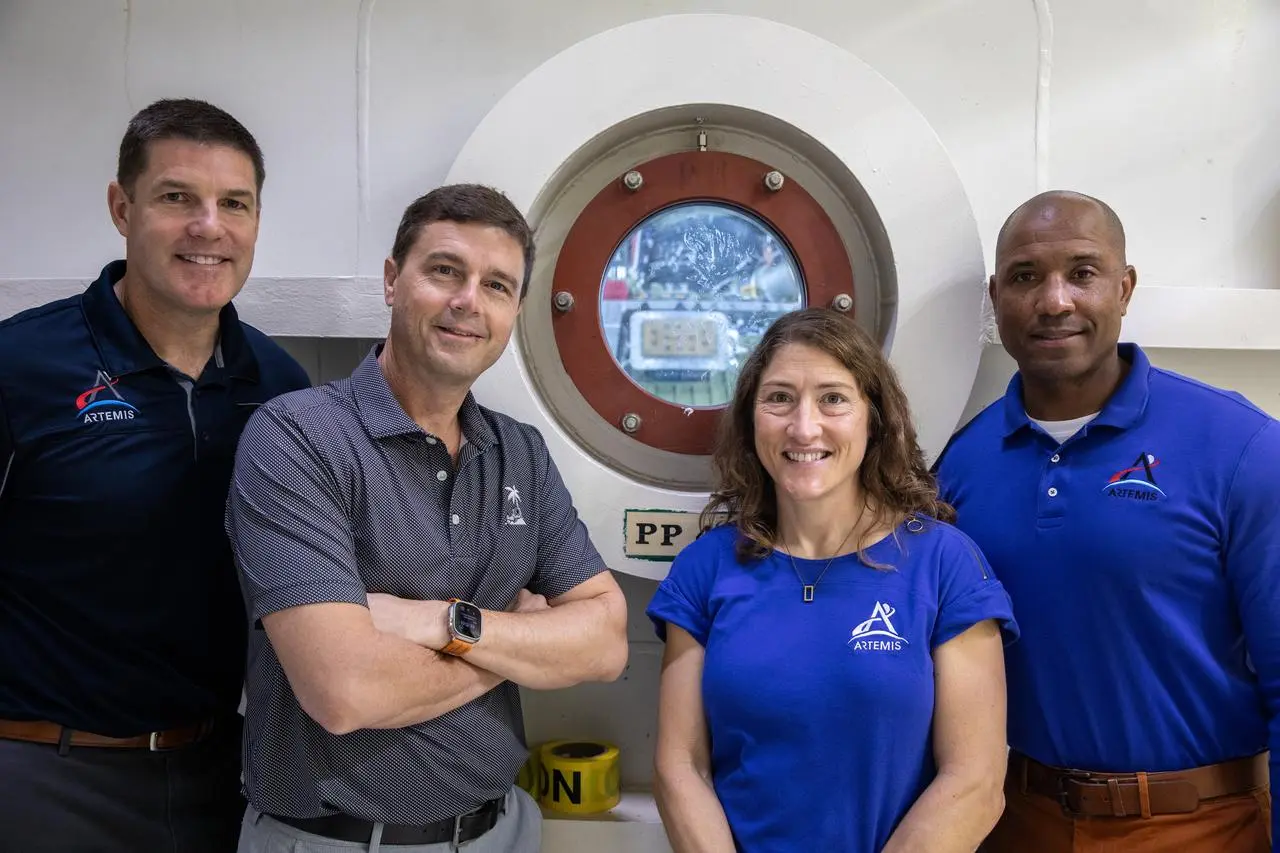
The Artemis II crew (from left): Reid Wiseman, Victor Glover, Christina Koch, and Jeremy Hansen
Artemis II Astronauts: Meet the 4 Heroes of Artemis. | StarzzSpace

.webp)